
Blueprint shipping and delivery
Every order ships via UPS: weekday orders placed by 12 PM Eastern ship the same day, UPS Ground is free when the print subtotal is $29 or more, and the faster UPS services are flat rates you choose at checkout.
UPS services and prices
One flat price per order for each service. Arrival is the UPS transit after the day the package leaves.
UPS services at checkout
| Service | Price | Arrives after dispatch |
|---|---|---|
| UPS Ground | $13.00 Free when the print subtotal is $29 or more | Typically 1–5 business days, by destination |
| UPS 3 Day Select | $22.00 | Within 3 business days |
| UPS 2nd Day Air | $38.00 | Within 2 business days |
| UPS Next Day Air | $60.00 | Next business day to most US addresses, by end of day |
Shipping is shown before you pay, and it is never included in the sheet price. There is no rush processing fee: a Next Day Air order costs the print price plus $60.00, nothing more.
When your order ships
Dispatch is the day the package leaves with UPS. It depends only on when you place the order, Eastern time.
Dispatch day by order time
| Order placed | Ships |
|---|---|
| Monday to Friday, by 12 PM Eastern | The same day |
| Monday to Friday, after 12 PM Eastern | The next business day |
| Saturday or Sunday | Monday |
Dispatch is not arrival. Add the UPS transit for the service you chose. An order placed Tuesday at 10 AM Eastern with Next Day Air ships Tuesday and arrives Wednesday by end of day to most US addresses. The same order placed Friday at 2 PM ships Monday and arrives Tuesday.
Before anything ships, a print technician reviews your files. If we spot an issue, we contact you before printing. The same-day dispatch page has the full schedule.
How prints are packed
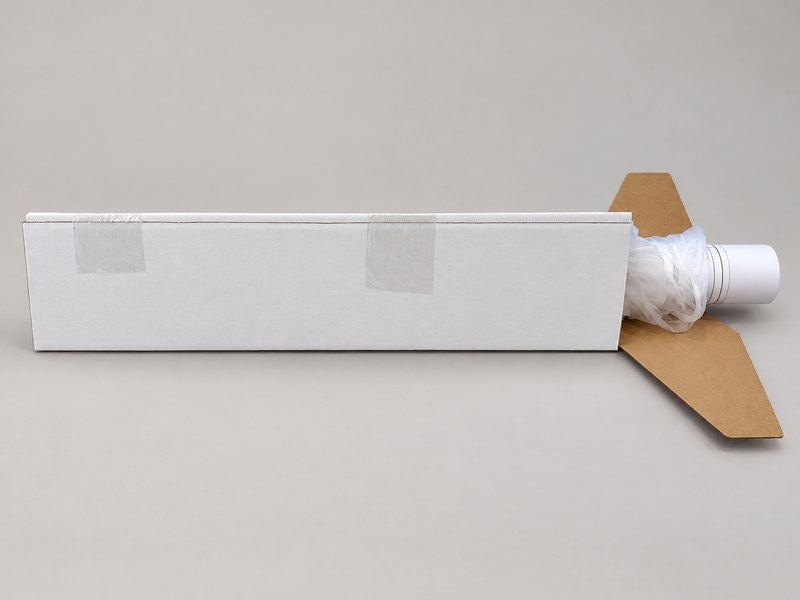
Prints are rolled, placed in a poly bag and packed inside a shipping tube.
Sets arrive rolled, not folded, so there are no creases across the drawings. The folding and rolling guide covers flattening a set and folding it for a binder.
Tracking and delivery
Tracking. The UPS tracking number is emailed to the address you give at checkout as soon as the label is created, so you can follow the package on ups.com.
Addresses. We ship to any UPS-deliverable address in the United States: job sites, site trailers, offices and homes. Enter the full address at checkout, including a suite or unit number. If a job site has no deliverable address yet, ship to the contractor's office. Azul Prints is online only; there is no counter pickup.
If something is wrong. If we print it wrong, we reprint it at no cost. Email info@azulprints.com with your order number and a photo of the problem. We reply by email.
Which service to choose
Work back from the day you need the set in hand.
Deadline and service
| You need the set | Choose |
|---|---|
| Next week or later | UPS Ground, free when the print subtotal is $29 or more |
| Within three business days | UPS 3 Day Select ($22.00) or UPS 2nd Day Air ($38.00) |
| Tomorrow | UPS Next Day Air ($60.00), ordered by 12 PM Eastern on a weekday; arrives by end of day |
| Several sets, no deadline pressure | UPS Ground; a multi-set order usually clears the $29 threshold |
Shipping questions
Does Azul Prints offer same-day shipping?
Weekday orders placed by 12 PM Eastern ship the same day via UPS, whichever UPS service you choose. Orders placed after the cutoff ship the next business day, and weekend orders ship Monday. There is no rush processing fee. Tracking is emailed when the UPS label is created.
What shipping options are available?
Four UPS services, chosen at checkout: UPS Ground, $13.00 and free when the print subtotal is $29 or more, typically 1–5 business days by destination; UPS 3 Day Select, $22.00, within 3 business days; UPS 2nd Day Air, $38.00, within 2 business days; and UPS Next Day Air, $60.00, the next business day to most US addresses. Shipping is shown before you pay.
Is there free shipping on blueprint orders?
UPS Ground is free on orders of $29 or more, measured on the print subtotal. Below $29 it is $13.00. Shipping is never included in the sheet price; the faster UPS services are flat rates you choose at checkout.
Can I get blueprints delivered overnight?
Choose UPS Next Day Air ($60.00) and place the order by 12 PM Eastern on a weekday. It ships the same day and arrives the next business day to most US addresses, by end of day rather than a morning hour. An order placed Friday afternoon ships Monday and arrives Tuesday.
How are blueprints packaged for shipping?
Prints are rolled, placed in a poly bag and packed inside a shipping tube. They arrive rolled; see the folding and rolling guide for flattening a set and folding it for a binder.
Do you ship to job sites?
Yes. Any UPS-deliverable US address works: job sites, site trailers, offices and homes. Enter the full address, including suite or unit, at checkout. If the site does not have a deliverable address yet, ship to the contractor's office instead. Azul Prints is online only, so there is no counter pickup.
What is the shipping cutoff time?
12 PM Eastern, Monday to Friday. Orders placed by then ship the same day. Orders placed after 12 PM Eastern ship the next business day, and orders placed on Saturday or Sunday ship Monday.
How long does UPS Ground take?
UPS Ground typically arrives 1–5 business days after dispatch, depending on the destination. If the date matters, choose UPS 3 Day Select, 2nd Day Air or Next Day Air, each of which has a defined arrival window after dispatch.
Related pages
Order by 12 PM Eastern and it ships today.
No account required. Review your total before paying.